
ÍSOR — Iceland GeoSurveyÍSOR — Iceland GeoSurvey

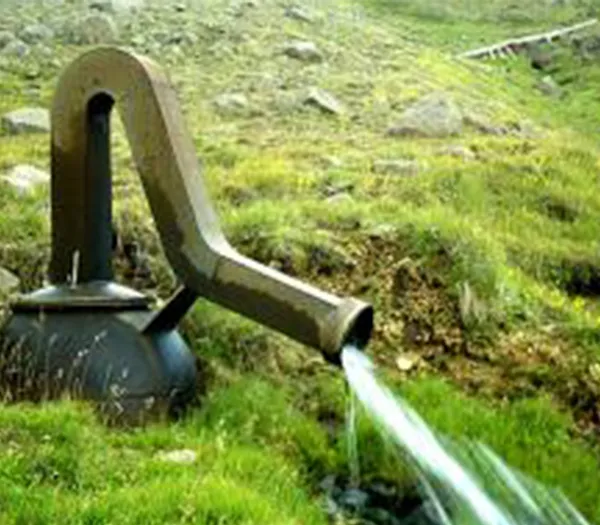
District-heating production monitoring

ÍSOR has decades of experience in assessing the energy reserves of geothermal fields, in both low- and high-temperature systems in Iceland and abroad. Assessing the size of a geothermal system involves surveys and research to determine the physical properties and energy-production capacity of the system concerned. The assessment is based on the data available at any given time, and on the stage the system's utilisation has reached. The data drawn on may come from surface exploration and from research and production drilling, as well as from production data.
ÍSOR's services

  • Conceptual modelling
  • Volumetric assessment
  • Numerical modelling of the geothermal system
  • Assessment of the effects of reinjection
  • Assessment of energy production
  • Assessment of the lifetime of geothermal systems
Get in touch

Related projects

COMPASS – casing & cementing of deep wells
Ongoing2022

COMPASS – casing & cementing of deep wells

ON Power

The project concerns the preparation for deep drilling and aims at solutions so that casings can withstand the strain that arises when high-temperature wells heat up. This is to be done, among other things, by examining cementing with "foam cement", a light and flexible cement that reduces the load on the casing. A method will be developed for releasing the pressure that builds up between casings (ÍSOR), corrosion protection by cladding will be specially examined, and corrosion tests will be carried out at the surface and down the well with a logging wire (ÍSOR). An integrated casing system designed to withstand supercritical conditions (including the use of expansion joints) will be tested in experiments at SINTEF in Norway, which also handles the simulation of boreholes.

RESULT – enhancing reservoirs in urban areas
Completed2020

RESULT – enhancing reservoirs in urban areas

TNO

For green cities (mission Horizon Europe), geothermal energy is expected to be used widely in urban areas for heating instead of fossil fuels. Geothermal utilisation in urban areas can be complex — even though the geothermal systems are relatively well known. The main aim is to demonstrate the possibility of a 30–100% increase in the main geothermal use for heating in urban areas in the northern part of the EU. RESULT achieves this by applying 1) optimisation methods and drill-and-learn approaches, 2) model calculations and uncertainty assessment, 3) using the best technology, 4) optimising methods for different conditions in Europe. The innovations will be 5) used in the design and drilling of doublet wells in the Netherlands.